TL;DR
Debating between Stan Store and Gumroad? Stan is perfect for social-first Creators who want an all-in-one link in bio store, flat monthly pricing, and no transaction fees. Gumroad is for indie Creators and hobbyists who want a low-risk way to sell and marketplace discovery, with per-sale fees instead of a monthly subscription fee. We’re breaking down each tool’s features, pricing, and overall experience so you can choose which is best for your needs.
Trying to decide between Stan Store and Gumroad? Choosing isn’t just about comparing features—it’s about finding the platform that fits your workflow and doesn’t add friction between you and your audience. That’s why we’re breaking down how the two stack up.
Creators who want a polished storefront, integrated marketing tools, and advanced features typically lean toward Stan Store. Gumroad, on the other hand, is known for its quick setup and pay-as-you-earn pricing model.
The right platform for you depends on how you engage with your audience and where your traffic comes from. If you’re driving traffic from TikTok, Instagram, or YouTube and want everything in one streamlined system, Stan Store’s social-first design is ideal. But if you’re an indie Creator who values simplicity and wants to start selling right away with no monthly commitment, Gumroad’s straightforward setup may be a better fit.
In this guide, we’ll walk through how Stan Store and Gumroad compare across features, pricing, and overall experience—so you can see the trade-offs clearly. By the end, you’ll know which platform best aligns with your goals, audience, and the kind of business you want to build.
Let’s dive in.
What’s the Stan Store?
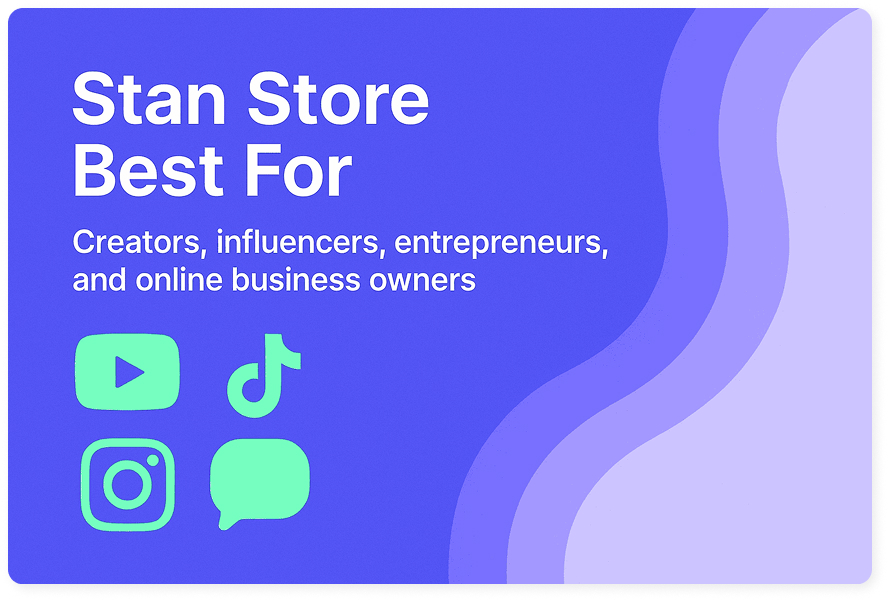
Stan Store is built specifically for Creators, by Creators. It transforms your link in bio into a complete sales system, turning traffic from TikTok, Instagram, YouTube, and other platforms into paying customers.
As an all-in-one Creator storefront, Stan makes it easy to convert followers from your link in bio without coding, plugins, or complicated tech.
The setup is fast, mobile-optimized, and designed to help you start selling right away. With a customizable design, fully hosted digital products, email marketing, and more—all working together seamlessly in one place.
Pro tip: You don’t have to stick with one approach forever—many new Creators start in one category and naturally evolve over time. Choosing a primary Creator type is just one way to help narrow your focus and build momentum faster as you get started.
What’s Gumroad?
Gumroad is designed for Creators who want to start selling digital products without a monthly subscription fee. It’s simple to use and supports digital downloads, subscriptions, and a basic storefront setup.
It’s known as an ideal platform for indie Creators, hobbyists, and those who want to leverage its internal marketplace with minimal upfront overhead. Even though it’s a quick, low-risk way to go from idea to sale, it’ll cost you substantially more as you grow compared to Stan, with far fewer features and built-in tools.
Key Takeaways
If you want a seamless way to sell more from your social bio, Stan is the better tool with more ways to diversify your offers, scale, and keep more of your hard-earned money.
If you want to test out a new idea before committing to a subscription, Gumroad can work well—but be cautious. Transaction fees add up quickly, and you’ll pay more the larger your sales become.
The key difference? Stan is built for Creators who want to sell from their social profile, while Gumroad is for hobbyists and indie Creators looking to sell on their internal marketplace.
Stan Store vs. Gumroad: Features,
Pricing, and Overall Experience
Features and Capabilities
Stan Store’s strength lies in its all-in-one tools. Your email marketing is tied directly to your storefront, so you can easily automate nurture sequences. And the appointment booking system integrates seamlessly with the rest of your offers, making it ideal for coaches and consultants who mix digital products with services.
Gumroad’s appeal is its simplicity—you can create a storefront quickly and sell a range of products. It supports flexible pricing models, including subscriptions and a pay-what-you-want option, which is useful if you want a diverse setup.
Where Stan stands out is in its Creator-first focus. From advanced features to memberships and communities, everything in the platform is designed to help Creators earn more. Gumroad lacks features like live chat, A/B testing, and Apple Pay, which may become roadblocks as your business grows.
| Feature | Stan Store | Gumroad |
|---|---|---|
| Storefront Customisation | Full customisation with 11 templates to choose from | Simple storefront pages with basic customisation |
| Marketing Tools | Built-in email marketing, automation, and AutoDM | Simple storefront pages with basic customisation |
| Analytics | Clear, conversion-focused insights designed for Creators | Simple storefront pages with basic customisation |
| Analytics | Lead magnets, digital products, coaching calls, online courses and webinars, memberships, communities, external and affiliate links, landing pages | Simple storefront pages with basic customisation |
Types of Content Creators
In today’s Creator economy, there are many different types of Creators and many ways to make money as one. Understanding which type aligns with your goals can help you choose the right content formats, platforms, and monetization strategies.
Most Creators fall into these categories:
- Most Creators fall into these categories: UGC (User-generated content) Creators create branded content for companies to use in ads, social posts, and marketing—without necessarily posting it to their own channels. They typically get paid per project or deliverable.
- Lifestyle Creators share their personal experiences, daily routines, and hobbies. They focus on fostering a personal connection with their audience, which can lead to paid brand collaborations, affiliate revenue, and digital product sales.
- Educational/How-to Creators teach a specific skill or topic, from business and fitness to cooking, personal finance, and everything in between. There are many different ways educational Creators can monetize their knowledge, including courses, coaching, events, and workshops.
- Entertainment Creators focus on using humor, trends, challenges, or storytelling to entertain. Their revenue often comes from brand deals, merch, and platform payouts.
- Review and recommendation Creators test out products and share their honest opinions to help shoppers make decisions. They’ll usually generate revenue through affiliate links and sponsorships, or by introducing their own curated product lines.
- Hybrid Creators blend elements from multiple categories (for example, a lifestyle creator who also sells online educational courses). If you’re a multi-passionate Creator who doesn’t fully align with one specific category, being a hybrid Creator might be the best option for you.
 Stan Store
  Instagram
  Tiktalk
  YouTube